
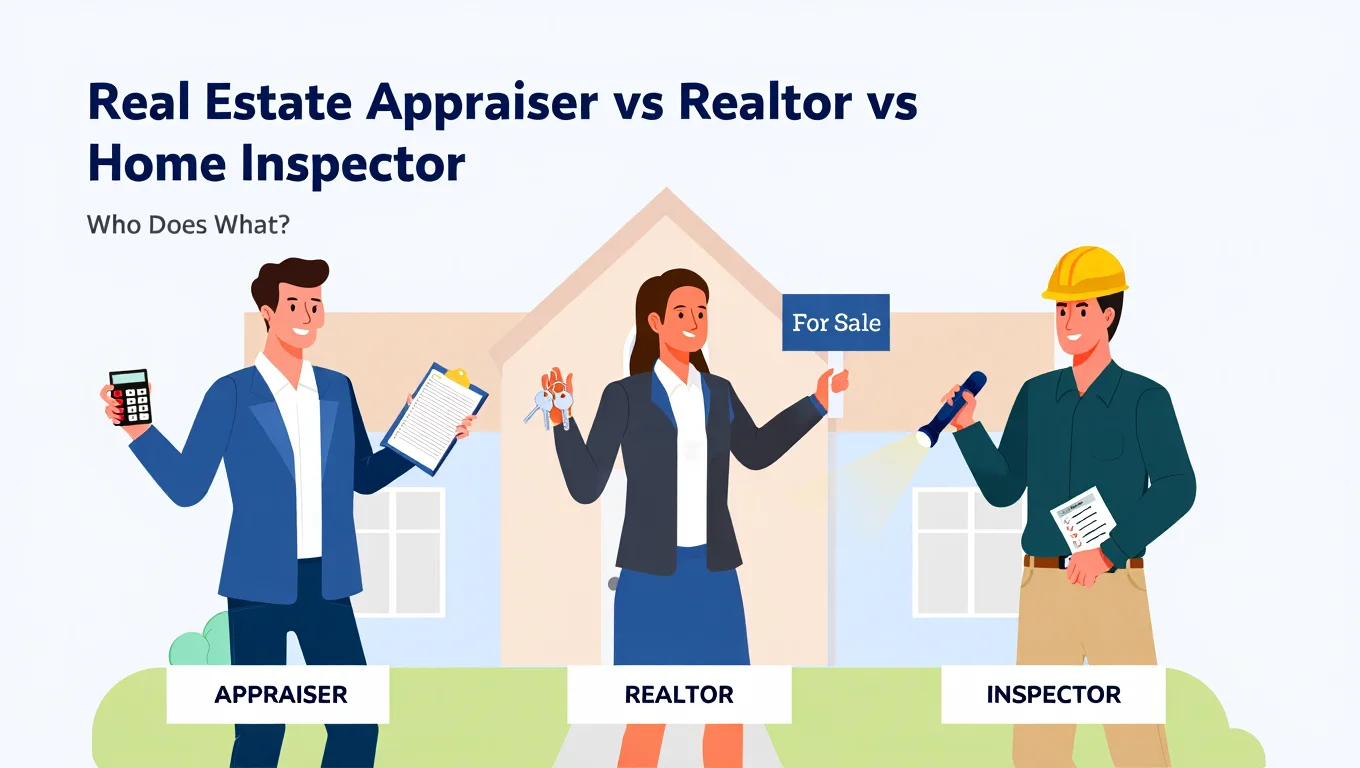
Real Estate Appraiser vs Realtor vs Home Inspector: Who Does What?
- admin
- May 20, 2026
The real estate industry is operated mainly by three different professionals. Realtors, appraisers and home inspectors. While all three belong to the real estate world, their actual duties and functions vary considerably. Many first-time buyers and sellers find it tough to draw a clear line between their roles, which often creates confusion and holds back their buying or selling process. You don’t want to get caught in this vicious cycle of jargon when your dream property is already on the market. In this blog, you will learn about the distinct roles of each real estate professional and how their expertise can help you make the most out of this process.
The Realtor: Your Advocate and Market Expert
Ready to buy or sell? A realtor or real estate agent is your go-to first contact. From the initial search to the closing table, they have the knowledge and experience to guide you every step of the way.
What is a Realtor?
A realtor is someone who brings both expertise and integrity to the table. As a member of the Canadian Real Estate Association (CREA), they are held to one of the highest ethical standards in the industry. They help you find your perfect home or get you top dollar for your property. They are considered experts in negotiating property deals and can help you make a higher profit.
Key Responsibilities
The job responsibilities of a realtor include advocating for their clients’ financial and personal interests. Their day-to-day duties include:
- Market Analysis: For sellers, Realtors rely on Comparative Market Analysis(CMA) to determine the listing price. The sales history of recently sold homes in the area helps to make cost adjustments accordingly. To assist buyers, they use the same data to prepare a competitive but fair offer.
- Marketing and Networking: Listing agents stage the home, coordinate photography sessions, and list your property on multiple Listing Services (MLS). Additionally, they host open houses and market the target property among a wide network of buyers.
- Property Search: Buyer’s agents prepare a list of homes matching their client’s budget and geographical preferences. They also cater to the home specifications required by the seller or the buyer. Additionally, they arrange private showings for the best matches.
- Negotiation: This is where a top-tier realtor engages their reputation. On your behalf, they negotiate the purchase price, closing costs, concessions and contingencies
- Contract Management: Real estate contracts are legally binding and packed with complex jargon. Realtors draft these documents, ensure all legal disclosures are made and keep the timeline on track so deadlines aren’t missed.
Who Do They Work For?
A realtor works exclusively for the client. For a buyer, a realtor’s duty is to get you the best home at the lowest possible price. Whereas in the case of sellers, they try to maximize profit and sell the home quickly.
Who Pays Them?
Realtors work on a commission basis. Usually, this is a percentage of the home’s final sale price that is shared by the buyer’s and seller’s agents. In most of the standard transactions, the seller pays commission to both agents.
The Real Estate Appraiser: The Objective Valuation Expert
The role of a real estate appraiser is to provide a precise valuation for the property. This is also reviewed by bank professionals when approving a mortgage. The valuation helps them to make sure they are not lending more than the home’s actual worth.
What is a Real Estate Appraiser?
A Real Estate Appraiser is a province-level licensed, highly trained professional. Their main work is to determine the fair market value of a property. They offer an unbiased perspective about your property and help with an accurate valuation thereafter.
Key Responsibilities
The appraiser provides an unbiased estimate of what a property is worth in the current market. Their process involves:
- The On-Site Visit: The appraiser conducts a visit to your property. Upon their arrival, they inspect the house closely, take measurements and verify square footage. They also stroll around the exterior part of your house and assess the overall conditions. The appraisers keep note of the number of bedrooms and bathrooms to conclude property valuation.
- Finding “Comps”: The most critical job for an appraiser is to find comparable sales. These professionals look for at least 3 to 6 similar home sales in the immediate neighbourhood. This history should include the sales history of the last 3 to 6 months.
- Adjusting Values: The appraiser understands the distinction between properties and hence makes mathematical adjustments accordingly. If the house, which is being appraised, has a pool and the comparative sales do not, the appraiser adds this value to the subject in accordance.
- Drafting the Appraisal Report: They compile their findings and data into a standardized appraisal report. They also add proper justification for how they reached the value.
Who Do They Work For?
The real estate appraiser works for the mortgage lender. The bank relies on the property as collateral for a massive loan. Hence, valuation by an appraiser is important to understand the home’s worth. In the near future, the lender needs confidence that the property can serve as collateral if foreclosure becomes necessary. In simple terms, an appraiser protects the bank from making a bad investment.
Appraisers may also assist homeowners with estate planning appraisals when families need accurate property valuations for inheritance planning, wealth distribution, or probate-related decisions.
Who Pays Them?
As part of the closing costs, the buyer pays the appraiser or upfront during the loan process. They get paid in the range of CAD $300–$600+. The accurate amount is decided by the size and location of the property.
The Home Inspector: The Property Detective
An appraiser is generally concerned about the value of a home. On the contrary, a home inspector caters to the physical condition of the property. They safeguard buyers against catastrophic defects.
What is a Home Inspector?
A home inspector is a licensed professional who is trained to conduct a visual examination of a property’s physical structure.
Key Responsibilities
Usually, a home inspector takes two to four hours to evaluate the home, starting from the roof to the foundation. They check for structural issues and maintenance. The checklist includes:
- Structural integrity: They look for major red flags like a cracked foundation, sagging floorboards, or signs of past floods.
- Outside the home: Checking the siding and landscaping to guarantee rainwater actually drains away from the house rather than pooling near the base.
- The roof: Inspecting the lifespan of the shingles along with the chimney flashing to catch potential leaks before they happen.
- Plumbing: Running the sinks and showers to test baseline water pressure. They also check the age of the water heater and hunt for slow drainage or hidden pipe leaks.
- Electrical setup: Take off the breaker box cover to spot dangerous wiring. The inspector also tests GFCI outlets in the kitchen and bathrooms to prevent obvious fire hazards.
- HVAC: Turning on the heating and air conditioning to confirm both systems actually pull their weight and provide proper ventilation.
- The Inspection Report: Based on the visit, the inspector prepares a report. That includes relevant photos and details of every single defect identified. The issues are ranked from minor cosmetic issues to major safety hazards.
Who Do They Work For?
The home inspector works for the buyer. They assist the families or individuals to know every minute detail before finalizing the purchase of a property. Upon finding a failing roof or a cracked foundation, a relator can use the report to negotiate repairs and ask for credit from the seller.
Who Pays Them?
At the time of service, the buyer pays the home inspector directly. Based on the size and age of the properties, an inspector charges somewhere between $300 to $600.
The “Vs.” Breakdown: Key Differences and Overlaps
To understand how each role fits into a transaction, it helps to look at where they work together and where they differ.
Real Estate Appraiser vs. Home Inspector
It’s easy to mix up an appraiser and an inspector; you’re not alone if you have. Both of them show up at your home, walk through every room, and take notes and pictures along the way.
The Appraiser helps you determine the home’s worth as per market value. They check your home’s square footage, integrity, upgrades, and quality of finishes. Based on these findings, they determine value. The Inspector checks the functionalities in a property. That means taking note of those missing shingles, checking for leaks and testing appliance effectiveness.
- The Appraiser helps you determine the home’s worth as per market value. They check your home’s square footage, integrity, upgrades, and quality of finishes. Based on these findings, they determine value.
- The Inspector checks the functionalities in a property. That means taking note of those missing shingles, checking for leaks and testing appliance effectiveness.
- Rule of thumb: The appraiser cares if the air conditioning unit exists (adds value). The inspector cares if the air conditioning unit actually blows cold air (functionality).
Realtor vs. Real Estate Appraiser
Both of these professionals determine a home’s worth, but they do it at different stages and for different reasons.
- The Realtor conducts a comparative market analysis to suggest a listing or offer price. This educated recommendation helps clients compete as per market rates. These professionals focus more on closing the deal.
- The Appraiser Performs a formal appraisal to yield the maximum amount a bank will lend. Their work must align with the strict federal and state guidelines. They act neutral towards closing the deal or not. In some cases, appraisers may also provide specialized reports for situations such as relocation appraisal, where employers and relocation companies require fair market valuations during employee transfers.
Quick Comparison Table
| Feature | Realtor | Real Estate Appraiser | Home Inspector |
| Primary Goal | Facilitate the transaction and advocate for their client. | Determine the fair market value to protect the lender. | Assess physical condition and uncover hidden defects. |
| Who They Work For | The Buyer OR the Seller | The Mortgage Lender | The Buyer |
| When Are They Hired? | Before the house hunt or listing process begins. | After a contract is signed, a mortgage is applied for. | Right after a contract is signed (during the contingency period). |
| Output / Product | Executed contracts, market analysis, and negotiated deals. | The Official Appraisal Report. | The Home Inspection Report. |
| Who Pays Them? | Usually, the Seller (via commission at closing). | The Buyer (upfront or at closing). | The Buyer (at the time of inspection). |
The Timeline: When Do You Need Each Expert?
To put it all into perspective, here is how these three professionals fit chronologically into a standard real estate transaction:
#Phase 1: Preparation and Searching
- The Realtor enters: You hired a realtor to represent you. That means if you are selling, they help you list homes and make the audience aware. On the contrary, if you are buying, they assist with writing an offer and participate in negotiating until the seller accepts.
#Phase 2: Due Diligence
- The Home Inspector enters: Once you are under the contract, you, as the buyer, hire a home inspector. They thoroughly check the physical aspects of your property. They prepare a report highlighting any leaks or bad wiring. Your realtor then negotiates a fix with the seller.
#Phase 3: Financing and Valuation
- The Real Estate Appraiser enters: Once the inspection hurdle is taken care of, your mortgage lender orders an appraisal. The home appraiser visits your home and confirms the bank’s purchase price. If the appraisal comes in lower than what is listed, the realtor should negotiate a lower price. Or, you may need to pay the difference amount in cash.
#Phase 4: The Closing
- Your realtor manages the final paperwork and verifies it with you. The lender agrees to fund the loan based on the appraiser’s findings. Finally, you take ownership of a sturdy home, which is thoroughly checked by the home inspector.
Start With the Right Guidance for Your Transaction
A successful real estate transaction requires a team of specialized experts. Trying to buy or sell a home without understanding the distinct roles of the Realtor, the Real Estate Appraiser and the Home Inspector can lead to delayed closings, financial losses, or buying a property plagued with issues.
Your Realtor is your guide and negotiator. The Home Inspector is your shield against buying a defective property. The Real Estate Appraiser is the objective judge ensuring the financial math makes sense for the bank. By relying on the unique expertise of all three, you can navigate the real estate market with confidence and peace of mind.
Frequently Asked Questions
What is the difference between a realtor, appraiser, and home inspector?
A realtor helps buy or sell the property, an appraiser estimates its market value for the lender, and a home inspector evaluates its physical condition. Each serves a different purpose, so understanding their role helps you avoid confusion during the transaction.
Do I need all three when buying a home?
In many cases, yes. Your realtor guides the deal, the appraiser confirms the home is worth the loan amount, and the inspector uncovers issues. Skipping one of them can leave you with negotiation blind spots, financing problems, or repair surprises.
Does a home inspector tell me whether to buy the property?
Not directly. A home inspector does not decide whether the purchase is right for you. Instead, they document defects, safety concerns, and maintenance issues. You use that information to renegotiate repairs, budget future costs, or walk away if necessary.
Who does the appraiser work for in a real estate transaction?
Although the buyer usually pays for the appraisal, the appraiser’s role is tied to the lender. Their job is to provide an unbiased estimate of value, helping the lender confirm the property supports the mortgage amount requested in the application.
Can one professional replace the others?
No, because their responsibilities do not overlap enough. A realtor cannot perform a licensed appraisal, an appraiser does not inspect every functional issue, and a home inspector does not negotiate the deal. You need each professional for separate decisions.
Contact Details
-
795 Main Street, Suite #300, Moncton,
New Brunswick, E1C 1E9, Canada - +1 506 269 2451
Business hours
Monday to Friday
9:00 – 17:00 AST
Seeking Certainty in Construction Costs or Property Market Value?
Our AACI and PQS designated team provides the rigorous loan monitoring and defensible appraisals required by New Brunswick’s leading lenders and developers.
Contact Info
Mon-Fri, 9:00 – 17:00 AST
Quick Links


Copyrights © 2026 All Rights Reserved